Blog
A coffee with Juan Carlos Pivaral
Coffee producer, roaster and distributor of La Marzocco in Guatemala
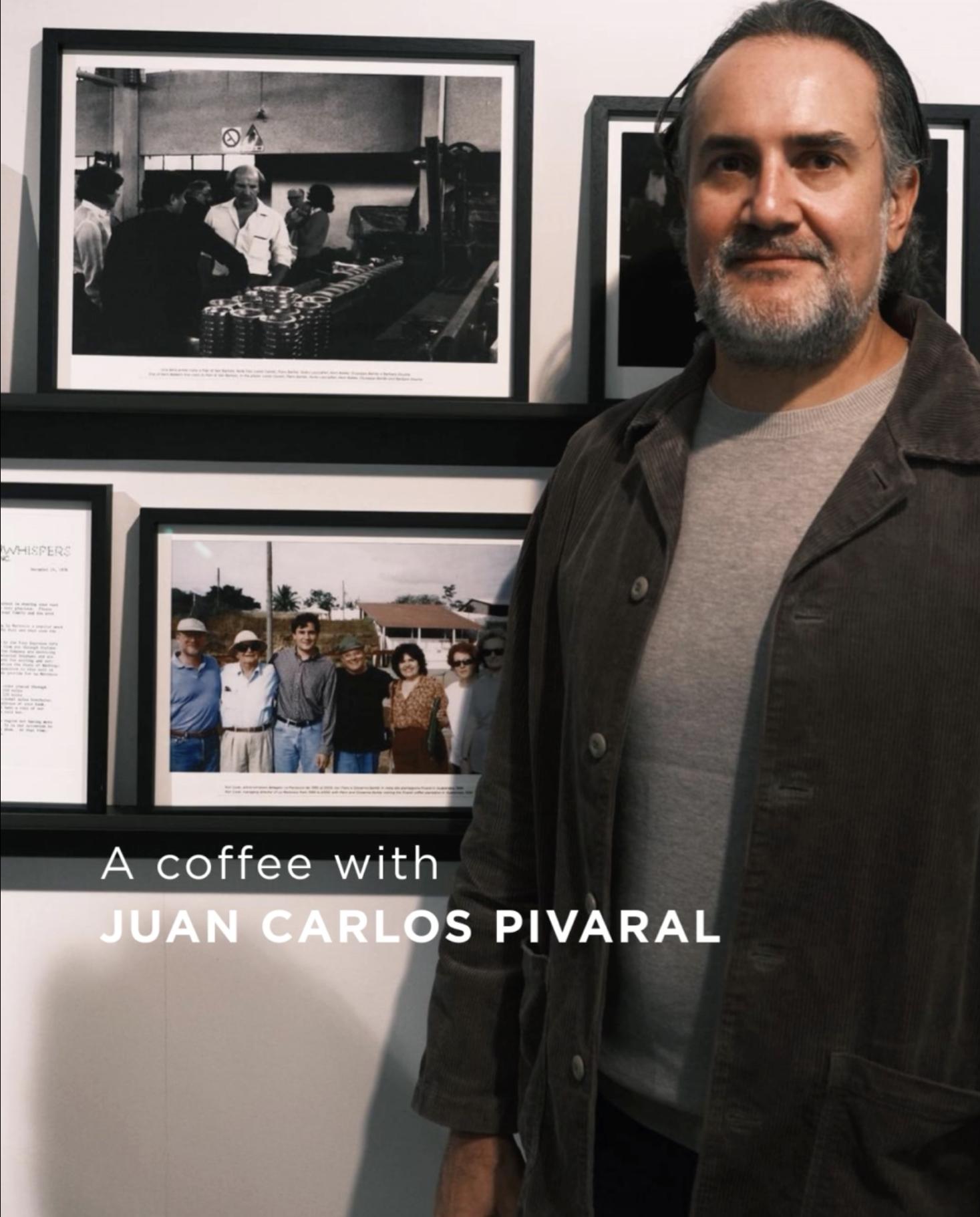
It all started with an email.
It was the 90s and I was 16. La Marzocco was trying to get its machines into cafés in the United States. I saw one of their machines for the first time and then read an article in Tea & Coffee Magazine about the company. I went to my father and said, “Look, I want to sell these machines.”
I don’t even know how I found their contact email – the internet was just beginning – but I wrote anyway, without really expecting a reply. A few days later, they answered. Not only to start a conversation, but to tell me they would soon come to Guatemala to visit. It was the best reply I could have imagined.
It was also a shock: I was under eighteen, waiting for people I didn’t know, who would stay for a whole week. I went to my parents and said, “There are some people coming from Italy to see me, what can I do?” They just said, “Don’t worry.” My mother called her mother, my father called his father, and we all spent that week together.
I went to pick them up at the airport: Piero, his wife Giovanna with a friend, and Ron Cook. When I greeted them, they assumed I was the son of the person they had been emailing with. My father had to confirm it was really me. His presence reassured them – they weren’t going to travel around Guatemala with just a teenager.
They met my whole family, visited our coffee plantations and we went to Tikal. They loved it. I was very curious to hear the point of view of an Italian on coffee, because my family had been in coffee for more than a century. I am the fifth generation.
My grandfather’s perspective was very different from mine and from Piero’s. They were in the same sector, but saw the business in completely different ways. Piero was fascinated by every step of processing; it was the first time he had seen a coffee farm. Even though my grandfather didn’t speak Italian and Piero didn’t speak Spanish, they talked the whole time – they really connected.
Piero wanted to see everything, smell everything, touch everything. In the photos you can see him feeling the cherries before washing and exploring every stage. He also visited our sugar production and loved discovering the entire process, from plant to white sugar.
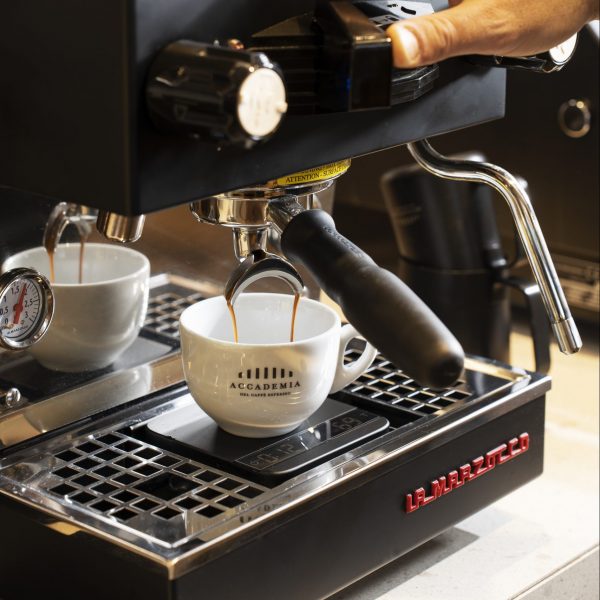
During that trip we bought our first machine and officially became La Marzocco distributors. Our first customer was a friend of Ron’s, who had a restaurant in Antigua. I remember Ron struggling to bring the machines – I don’t know how he managed. We uncrated my first machine and Piero showed me what to do. I still make coffee the way he taught me that day. The first machine I ever touched was a La Marzocco: a two-group Linea. I still have the bodywork and would like to turn it into a table; it’s a very special piece.
We still have very old machines in the market; the oldest I’ve seen is from 1999. They come in for maintenance and still work. That’s where you see the quality people pay for – machines that have been running for 25 years and are still in service. It’s impressive and a strong proof of value.
Our plantation was founded in the 1890s. We have a small farm in the producing region where we still grow coffee, and it has been in my family for more than a hundred years. Piero visited that one too, as well as our newer farms. Today we are still in coffee: we grow it, process it and roast it. We now cover the entire value chain.
My grandfather represented the old guard of production in Guatemala: for him, coffee meant growing, producing green beans and exporting them. That was it. I extended our work to roasting, starting the roastery in 1995, and then to distribution. When I told him I wanted to roast coffee, he disagreed – others were already doing it. For him we were producers, and we had to respect the chain. Yet he still helped me a lot at the beginning.
When I told him I wanted to sell espresso machines, he said, “No, I have a friend who sells them, you should talk to him.” Most people who came to Guatemala from Germany or Italy built their businesses on exporting coffee back home. My grandfather inherited that Italian legacy and that mindset, so he immediately said no. I was the opposite: I wanted to do everything I could and had to rethink my strategy, because he was very clear – and a bit rigid – about what our role should be.
That attitude was old-school. Today the industry has changed a lot: everyone roasts, everyone sells coffee machines. There is greater awareness of how much the sector can offer, and you always have to do a little more.
At the beginning it was really difficult, because people didn’t see the value of an espresso machine. They couldn’t understand investing so much money in a machine. Today the same offer would make you smile – it’s nothing compared to what an espresso machine can deliver. The market here is still developing, but people are beginning to realise the importance of a good espresso machine. Coffee is increasingly supporting the country: quality is rising and customers here pay more for a cup of coffee than in many developed countries.
In Guatemala today you can find an espresso or cappuccino that costs as much as three euros. If people are willing to pay for these drinks, it’s the beginning of change: better quality requires better machines, and the sector is taking shape. Guatemala is entering the phase Italy has already gone through.
My grandfather always saw coffee as a commodity; his horizon ended with coffee ready for export. As an exporter he focused on raw material quality, processing and procedures. Piero, instead, was very aware of the barista and the importance of the result in the cup – something that simply didn’t exist for us then. My grandfather and Piero spoke different languages while working in the same field. All the work that happens at the machine was unknown to us; for Piero it was essential, the part of the process that would ultimately allow us to earn. Two completely different points of view.
When I visited the factory, Piero always showed me what they were working on – new projects, new products. He knew how important innovation was. I have many memories of time spent with him in Japan for the WBC, and a beautiful photo with my parents and Piero from one of the trips when we were able to spend the most time together.
Of course business is based on agreements, contracts and profit, but a relationship that lasts this long is about personal connection. In that photo you can see it wasn’t a business trip; it was an exchange on a human level, between people, not just business partners.
Our family also represents other brands, and with some of them we will soon celebrate important anniversaries – fifty, sixty years. It’s in our DNA, and we want to grow where we can grow. We hope La Marzocco has a bright future with us, because there are many opportunities for the country and great potential for coffee producers. Customers are ready to pay. In a way, the circle is finally closing.
Espresso is something that has truly changed the world. Italy has taken it everywhere, bringing differentiation and better productivity from the beans, so now you can have higher quality in the cup using less coffee.
When I look back, I can’t forget the first cup I drank, made with the coffee from when I opened my roastery. I had never drunk coffee before, but I was always curious, leafing through the old coffee books my father kept in his office on the plantation. Most of my impressions of coffee came from those books until I finally tasted my first cup, roasted by myself. From that moment on, I began to understand the importance of espresso machines. That’s when I fell in love with La Marzocco.
The machines looked different back then – more solid, more robust. The dual boiler made a lot of sense; it simply made it a better machine. My passion for La Marzocco starts there.